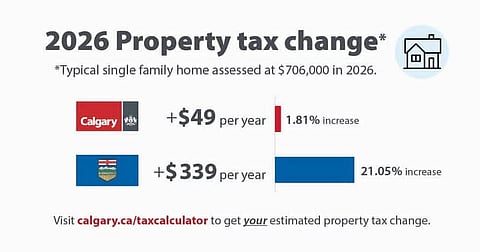


Calgary and Edmonton homeowners will see increases in their property taxes this year due to the education tax included in the Alberta budget rolled out Thursday, but Calgarians will take a larger hit than will Edmontonians.
In Calgary, the average increase will be in the area of $349 per year, while in Edmonton the average will be approximately $154 per year. Calgary accounts for more than a third of the province’s education tax base, which is why Calgarians will pay more.
Additionally, the average home price in Calgary is higher than in Edmonton, and the province increased the education property tax rate from $2.72 to $2.84 per $1,000 of assessed value this year.
After Calgary city council held Calgarians’ tax increase to 1.81% this year, Mayor Jeromy Farkas hit out at the province’s increase on Friday.
“We did our work to restrain spending while focusing on safety and core infrastructure,” said Farkas.
“The provincial government has just imposed the largest property tax increase on Calgarians in history. In 2026, Alberta is increasing its share of your property tax bill by 21.05%. Nearly 42% of every residential property tax dollar now goes directly to the province, and the city is legally required to collect this massive tax increase.”
In total, the provincial budget’s property tax increase will see more than $1.2 billion coming from Calgary and close to $640 million from Edmonton.
Surprisingly, perhaps, the big city mayors' reactions were different from each other.
Edmonton Mayor Andrew Knack, who is known as having left-leaning politics, said, “We’ll happily collect that and make sure we remit to them and knowing that that's going to go to good investment,” he said.
“But we also need to remind people that that's actually not going to the city to provide municipal services.”
Farkas isn’t so sure Calgarians will see benefits from their increase.
“We're getting very close, perilously close, to half of every property tax dollar being collected in the City of Calgary going to the provincial government to fund provincial priorities without a very clear line of sight in terms of whether that's being invested back here in the City of Calgary,” said Farkas.
He wants Calgarians to know the increase came from the province, not the city council.
“It bears the bigger and the deeper transparency question,” he said.
“Maybe most Calgarians, they'll open up their property tax bills and they will assume that most, if not all of the money that is going off of their monthly debits, if they're in the installment plan. or in their yearly payments, they're going to assume that money is going to the city for city priorities.”
“But right now, we're on track for at least a 40/60, if not 50/50 split in the coming years. So a big focus of ours is to be able to demonstrate to Calgarians that we are doing our part and calling on the province to do theirs.“
The budget was based on oil priced at $75 a barrel, but it's been averaging around $60, with Horner saying every dollar the price of oil drops results in a loss of revenue of $680 million.
Alberta Finance Minister Nate Horner said the province expects to generate $6 billion this year through premiums, fees and licences, which is expected to rise by $420 million over the next two years as Alberta's revenue challenges are expected to continue to persist in the near future.
Calgarians can estimate their increases at calgary.ca/taxcalculator.
