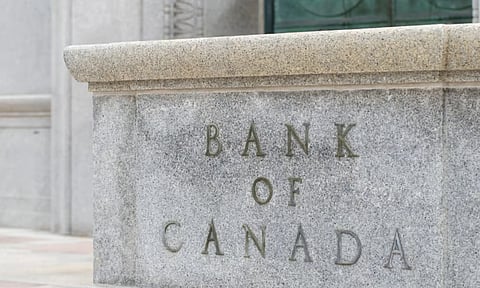


The Bank of Canada held its target for the overnight rate at 2.25%, on Wednesday with the bank rate at 2.5% and the deposit rate at 2.20%.
In a statement, the bank said the conflict in the Middle East has heightened economic volatility, and US trade policies which are affecting global trade patterns are expected to continue.
“The Iran war has led to sharply higher energy prices and transportation disruptions, diminishing growth prospects in oil-importing countries and boosting inflation worldwide,” said the bank, “In the United States, growth is still expected to be solid over the projection horizon, boosted by AI-related investment and consumption growth. China’s economy is being supported by robust exports. In the euro area, higher prices for oil and natural gas will weigh on economic activity.”
Bond yields are slightly higher since January while equity markets have recovered. Since the start of the war, the US dollar has appreciated against most major currencies and the Canada-US exchange rate has been relatively stable, added the bank.
“Overall, the global economy is expected to grow by about 3% in 2026, 2027 and 2028,” it said. “Projections for inflation over the next year are revised up because of the jump in energy prices.”
After pulling back in the fourth quarter of 2025, the bank feels growth is forecast to have resumed in early 2026.
“Consumer and government spending are supporting economic activity, while tariffs and trade uncertainty are weighing on exports and business investment,” it said. “Housing activity declined in the fourth quarter and is being held back by slow population growth, economic uncertainty and ongoing affordability issues. The labour market is soft, with subdued employment growth over the past year and job losses in sectors targetted by US tariffs. The unemployment rate remains in the 6½%‑7% range, reflecting both weak hiring and fewer job seekers.”
Inflation rose to 2.4% in March due to higher gasoline prices and came on the heels of several months of slowing inflation data.
“Core inflation has been easing and held steady at just above 2% in the most recent inflation report. The proportion of components of the CPI basket rising above 3% has also declined in recent months,” said the bank. “As expected, so far there is little evidence that oil prices have fed through more broadly to goods and services prices, but this warrants close attention in the months ahead.”
“Inflation will likely rise further in April to about 3%. Based on the assumption that oil prices will ease, inflation is forecast to come down to the 2% target early next year and remain around 2% over the projection horizon.”
