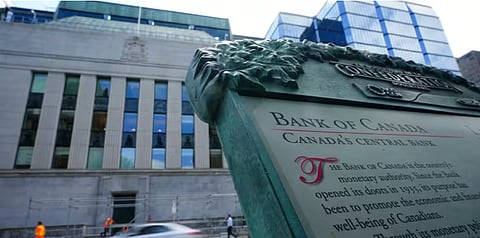
Most economists are usually on the same page in the days leading up to a Bank of Canada rate announcement, but the only consensus for the bank's announcement on Oct. 28 is there will not be a rate cut. The bank has held its rate at 2.25% since last year and, "rather than cutting rates, financial markets and economists point to a cautious stance with risks leaning toward a hold or even a potential rate increase due to persistent energy prices and inflation pressures," says Canadian Mortgage Professional (CMP). Derek Holt, vice-president and head of Capital Markets Economics at Scotiabank, says the bank will take a hike. "I was marketing to fixed income clients in Montreal on Wednesday," wrote Holt in his daily review on Thursday. "Some accounts were fully onside our market-leading Bank of Canada hike views, some were reconciled to begrudgingly go along with hikes, and only one account was not buying priced hikes." "Markets continue to price about 85% of a hike next week and about half of another hike in December with about 100 basis points priced by next September," added Holt. "Desjardins expects two quarter-point increases, starting in late October," reports CMP..Speaking at the Mortgage Professionals Canada conference in Calgary this week, Stefane Marion, chief economist at National Bank of Canada in Montréal, said the bank needs to be cautious. “I don’t think that the Bank of Canada should be hiking next week, and if they do hike, they can’t be too aggressive,” said Marion, recommending brokers steer clients to five-year fixed mortgages. Look up, said Grant Armstrong, chief growth officer at WealthOne, "I think rates will probably go up in October. Guaranteed Investment Certificate rates are up 35 points in the last sixty to ninety days. Bank of Canada bond rates are up 60 points,” he said. And there are those holding to a bank rate hold, including Leslie Preston, managing director and senior economist at TD Economics. "No jump scares in Canada’s inflation in September, in contrast to higher inflation south of the border,” she wrote. “September's number supports our view that the Bank of Canada can remain on hold this year. There is little evidence higher energy costs are bleeding through to broader price pressures, which remain mild.” At RBC Economics, economist Abbey Xu said RBC's base case is, "the overnight rate at 2.25% through year-end before rising modestly in 2027." .The September data served as confirmation that energy is not yet spreading into broader price growth, said Dr. Sherry Cooper, chief economist at Dominion Lending Centres. "(September’s) inflation report reinforces our view that higher gasoline prices temporarily boost headline inflation while further eroding household purchasing power," she said. "However, these energy-driven increases, largely tied to geopolitical tensions, are unlikely to trigger a broader resurgence in underlying inflation." "Our base-case scenario is that the Bank of Canada will remain on hold at its Oct. 28 meeting. For now, underlying inflation trends in Canada remain consistent with a patient, wait-and-see approach.” It might be the most dramatic Bank of Canada decision in ages, said Clay Jarvus of Ratehub.ca"Analysts are split on whether the bank should raise the overnight rate, but this week’s spike in bond yields was the result of investors betting on a rate hike,” said Jarvus. “It’s hard to see a clear path to a rate increase at this point. Inflation breached 3% in September, but that was on the back of oil prices. Inflation may be a growing concern, but it’s not yet the kind of widespread problem that demands the bank’s attention.” "Rising unemployment, meagre economic growth and the trade war with the U.S. feel like more pressing problems, which makes a rate hold next week seem more likely.”