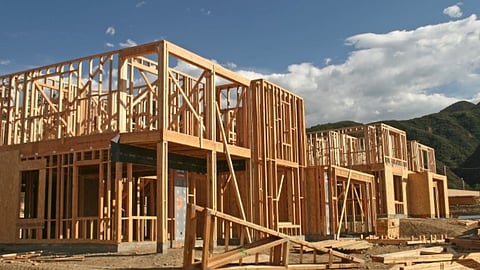
Finance Department officials say major housing projects can take up to seven years to reach completion as Ottawa remains far short of its target of at least 500,000 housing starts annually.An internal Briefing Note To The Deputy Minister said lengthy planning and construction timelines, inflation and labour shortages could delay efforts to increase Canada's housing supply.“Residential development is a lengthy process and can take up to seven years for multi-unit projects with 3 to 5 years devoted to planning, and another 1 to 2 years for construction,” said the note.“This often results in a timing lag between when a project actually begins and when it appears in housing starts and completions data particularly for large multi-unit projects like rentals and condos.”The January 30 document, released through Access To Information, also cautioned that Canada Mortgage and Housing Corporation figures do not immediately register construction activity.“There is also a lag between when construction begins and when CMHC records a housing start, as this only occurs once the foundation or concrete footing is fully poured which can be a year or more into construction for large multi-unit projects,” said the note Housing Market Outlook.Housing starts totalled 241,171 last year, less than half cabinet's target of at least 500,000 annually to restore affordability.CMHC forecasts suggest construction could decline further.“CMHC projects that starts will decline to around 230,000 in 2026 and 220,000 in 2027 in their baseline, while a weaker scenario sees starts falling to about 210,000 in 2027,” said Market Outlook.Finance officials said the industry's normal development delays have been compounded by construction inflation of 3.3% annually as well as “declining productivity and labour gaps.”“Homebuilder confidence has remained depressed,” said the censored 56-page briefing note..The findings echo a 2025 Parliamentary Budget Office report, Introducing GST Rebates For First-Time Homebuyers, which forecast housing starts would remain well below Ottawa's target for years.Budget Office analysts projected starts would peak in 2030 at fewer than 262,000 annually.Canada has never recorded 500,000 housing starts in a single year. The national record was set in 1976 when builders started 273,200 homes.CMHC has separately warned that even dramatically increasing construction would not quickly restore affordability.“CMHC research shows this could take up to 30 years,” analysts wrote in the 2025 commentary Housing Construction Timelines And Affordability In Canada. “This is much too long for Canadians looking for a more affordable housing option now.”CMHC estimated the design, development and permitting process for a typical project takes three to five years, followed by another one to two years of construction.The federal insurer said the effect of additional housing supply on prices could take considerably longer to work through the market.“It takes up to 20 years to feel the full effect of additional market housing supply on lower housing prices,” said CMHC.“All in all from design of a project to filtering that makes housing attainable, it takes 25 to 30 years before new housing supply is delivered and its full impact on lower rents or prices is felt,” analysts wrote.“This is far too long for Canadians looking for an attainable housing unit option. It’s much too long to see the end of our current housing crisis.”