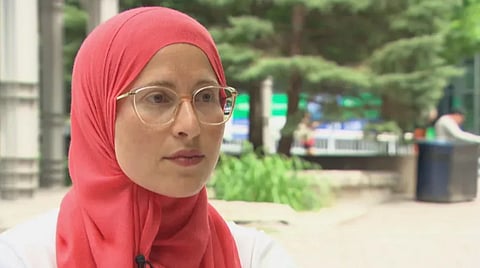
A federal cabinet advisor quietly authorized an $80,000 taxpayer-funded grant for pro-Palestine research while publicly denying any such funding, newly released Access to Information records show.Blacklock's Reporter says documents reveal Amira Elghawaby, the federal government’s Special Representative on Combating Islamophobia, approved the payment to York University’s Islamophobia Research Hub to produce research aimed at countering what it described as “disinformation” by MPs, senators, and the media. Elghawaby’s office repeatedly denied the funding when questioned at the time.“Thank you again for this impeccable work,” Elghawaby wrote to researchers at the York University hub in a message disclosed through records. She said the report was intended to help Canadians understand “the climate impacting our communities since October 7.”The study, titled Documenting The Palestine Exception: An Overview Of Trends In Islamophobia, Anti-Palestinian Racism and Anti-Arab Racism In Canada In The Aftermath Of October 7, 2023, was unveiled at an August 6 Parliament Hill news conference. Elghawaby publicly endorsed the findings but did not disclose that her office had paid for the research..“This report will help inform the advice I provide to the federal government,” she told reporters at the time, adding her office would review the recommendations.When asked by Blacklock’s Reporter whether the researchers had received government funding, Elghawaby’s office denied it outright. “It has never made a donation to the Islamophobia Research Hub at York University,” a spokesperson said.But Access to Information records now contradict that statement, showing Elghawaby signed a Memorandum of Arrangement with York University on January 6, months before the report’s release. Under the agreement, the Research Hub received $80,000, a grant that was not publicly disclosed.The report urged consequences for elected officials and media outlets deemed unsympathetic to the Palestinian cause. .It called on the Ethics Commissioner to develop enforceable policies to hold parliamentarians accountable for what it characterized as disinformation targeting marginalized communities.Draft versions of the report complained of “systemic biases in media,” insufficient coverage of Palestinian perspectives at the CBC, and the “complicity and shortcomings of political leadership.” It also urged Canada to uphold commitments to Gazan refugees and to recognize May 15 as “Nakba Day.”“Affirm Palestinian identities and histories by recognizing May 15 as Nakba Day,” the draft stated.A United Nations guide describes the Nakba, meaning “catastrophe” in Arabic, as the mass displacement of Palestinians during the 1948 Arab-Israeli War.Canada did not oppose the creation of a Jewish state in 1948 but abstained from the final United Nations vote, according to cabinet minutes from the time. Diplomatic relations with Israel were extended seven months later under then-prime minister Louis St. Laurent.