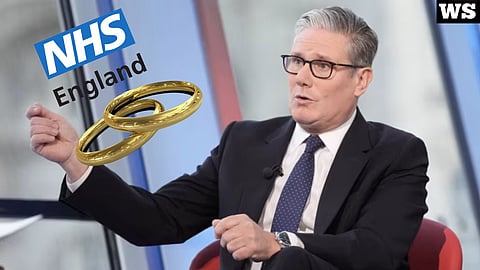


TORONTO — U.K. Prime Minister Keir Starmer announced Monday that he will step down as leader of the governing Labour Party, ending months of speculation about his political future after mounting pressure from within his caucus.
Starmer said he will remain as caretaker prime minister until Labour selects a new leader in the coming weeks. His resignation follows growing dissatisfaction among Labour lawmakers after the party suffered significant losses in local and regional elections in May. More than 100 Labour MPs had reportedly called on him to set a timetable for his departure.
The prime minister, who took office following Labour’s victory in the July 2024 general election, had repeatedly stated he would not resign. However, pressure intensified after a series of political setbacks and cabinet resignations.
Attention has now turned to Andy Burnham, the former mayor of Greater Manchester, who is widely viewed by Labour members as the leading candidate to replace Starmer. Burnham recently returned to Parliament after winning a byelection in the Makersfield constituency with 55% of the vote.
n a statement following Starmer’s announcement, Burnham thanked the outgoing prime minister for his service and confirmed he intends to seek the party leadership.
“His decision marks the beginning of a transition and it is important that this process is conducted in an orderly and responsible way,” Burnham said.
Former cabinet minister Wes Streeting also endorsed Burnham’s candidacy, urging Labour MPs to unite behind a single successor rather than engage in a lengthy leadership contest.
Starmer’s leadership came under increasing scrutiny after Labour’s poor performance in May elections across England, Scotland and Wales. Labour lost nearly 1,500 local council seats in England, while Reform UK made major gains. The party also suffered setbacks in elections to the devolved legislatures in Scotland and Wales.
Political analysts have pointed to broader challenges facing British politics, including economic pressures, immigration debates and voter dissatisfaction with established parties. Colm Murphy, a senior lecturer in British politics at Queen Mary University of London, said Britain has experienced significant political volatility since the 2016 Brexit referendum.
“No party commands significant support from the country,” Murphy said.
Opposition parties reacted quickly to the announcement. Reform UK leader Nigel Farage called for a general election, while Liberal Democrat leader Ed Davey said the change in leadership should be accompanied by broader political reforms. Conservative leader Kemi Badenoch criticized Labour’s record in government and argued the resignation would not change the party’s policies.
Starmer entered Parliament in 2015 and became Labour leader in 2020 after the party’s defeat in the 2019 general election. He led Labour back to power in 2024, presenting himself as a centrist focused on economic stability and restoring confidence in government.
His government, however, faced criticism over its handling of economic issues and several political controversies. Most recently, questions surrounding the appointment of Peter Mandelson as ambassador to the United States contributed to renewed scrutiny of Starmer’s leadership and prompted several resignations within government.
No date has yet been announced for the Labour leadership contest, but Starmer indicated he expects to remain in office through the summer while the process takes place.
