

William D. Marriott is a retired economist who specialized in public policy analysis of the oil and gas industry.
Some wise counsel to voters eager to make their voices heard in October: Calm down. Remember, the main question is not a yes/no on independence. And the non-binding condition gives Premier Danielle Smith an out if she doesn’t like the answer.
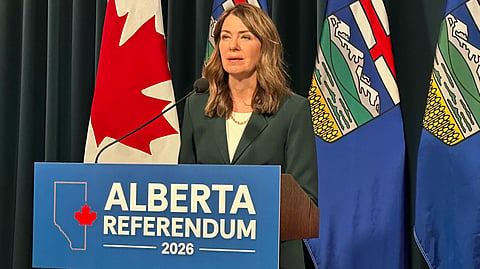
Despite being endlessly portrayed as a full-on “separation” referendum, the question asked is no such thing. It is more akin to taking the provincial temperature, or “testing the waters,” or a really big opinion poll. It commits the government of Alberta to absolutely nothing. So why do it?
The important thing is the debate. Here and across Canada. Despite the shrill commentariat, can we keep it civil with our families and neighbours? We must if we want to suggest the strategic benefits of the “pursue binding referendum” option.
In this way, the referendum is far from meaningless. It is a once-in-a-lifetime opportunity. It will either give Smith leverage to negotiate a better Canada starting on October 20, or we will be stuck with the status quo or worse, at least until the independence movement re-emerges better organized and more powerful.
Speaking of the independence movement, what do we really know about them? Despite the characterization of a few vocal figures as “leaders,” the movement today is really still a grassroots, organic, populist phenomenon. It arose from “severely normal” Albertans observing Alberta’s status within Canada. Its political rumblings have been obvious to those with “their ears to the ground.” But there is no political party with a formal platform and elected leaders. There is no broadly supported organization which speaks for the 7,000 petition volunteers and the approximately 300,000 petitioners.
Make no mistake, it is these numbers alone that strike fear into the status quo federalists. Current polling is meaningless, four months out from the vote. But the mobilization of this populist force on the ground will provide serious momentum leading up to October. They just need to be asking the right questions. The result could mean the beginning of the end of the progressive social and economic ideologies that have driven Canada down over the last ten years. Yet every insult, every judicial decision, every sneer, smirk, and condescending comment aimed towards the secessionists only serves to harden their resolve and fuel their passions. The current federalist strategy of derision and suppression of debate will likely backfire.
For example, demonizing the oft-quoted, but self-appointed, independence “leaders.” They are merely filling a void when the media needs a “separatist comment.” Not being practiced politicians, as well as being uninhibited and undisciplined, they are making ill-advised, outrageous comments, and as such, they are easily ridiculed. But they don’t really speak for the rank and file of the movement. They don’t capture the ‘why’ of each independence supporter’s decision. And that ‘why’ has to be the focus of every conversation with friends and family.
The movement’s credible spokesman, Keith Wilson, is rarely quoted because his calm, measured argument and command of the issues will not fuel contempt. This will change now that he and Tanya Clemens have launched the Let Alberta Decide website. This is the perfect pairing of activists: the nerdy King’s Council lawyer and everyone’s reassuring, calm sister or mom. Wilson is also working with something called the Alberta Transition Council to prepare a “white paper.” A white paper is policy-wonk-speak for a detailed report that breaks down complex issues and presents a viable policy solution. Voting Albertans should give it a read. Independence supporters should commit the arguments to heart.
The status quo side also has leadership shortfalls because of its significant political baggage. Are former failed politicians Thomas Lukaszuk (who thinks Smith is a Nazi) and Jason Kenney (fired because of his COVID overreach) the best we can do? And future failed politicians Naheed Nenshi and Pierre Poilievre are not gaining much traction. Poilievre came to Calgary claiming Alberta has legitimate concerns, but failed to explain why he would not even attempt to reform equalization. The reason is the same as why the Stephen Harper years also failed to get a better deal for Alberta and Canada — the Laurentians won’t allow it.
Which brings us to the brilliance of Smith’s approach. She wants far more than a pipeline. She wants a serious realignment of the Canadian confederation. What she needs now is the power and leverage to negotiate. The current debate provides ammunition, and the referendum keeps the pressure on Carney to deliver on the pipeline. But more, the referendum results may provide a way to demand an immediate, substantive first ministers conference to deal with the impending “unity crisis.” Then we can have a real debate on Canada’s future.
For Albertans, this represents a cost-free wager. Vote for a future binding referendum which can propel substantive negotiations now? Or vote for the dead-end status quo. Why not give Smith the leverage to negotiate a better Canada? If she fails, what have you lost? Good question to ask your neighbour.
William D. Marriott is a retired economist who specialized in public policy analysis of the oil and gas industry.
