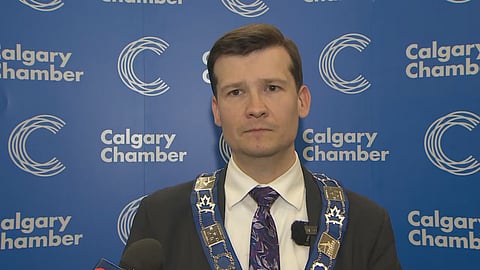
William D. Marriott is a retired economist who specialized in public policy analysis of the oil and gas industry.Do the politicians run City Hall or the bureaucrats? Does it matter?I can’t imagine the disappointment of a neophyte councillor (e.g., Landon Johnston, who one day was a furnace contractor and the next was elected) when they realize how very little influence they have. Their first encounters with the process of civic government, the restrictions on information, the endless procedural entanglements, and the sheer size of the nearly 17,000-strong bureaucracy must cause despair.But I would suggest the politicians need to fight back, or they may be deemed “surplus to requirements.” The old adage “You can’t fight City Hall” must never apply to city councillors.We have all heard there are three levels of government: federal, provincial, and municipal. The existence and separation of powers at the first two levels are established by Canada’s Constitution. By contrast, local governments operate at the sole pleasure and direction of the provincial government, and there is no debate about who has the power. .Thus, municipalities merely take over some of the administrative duties of the Province. They should be primarily concerned with very practical things such as firefighting, policing, providing water, sewer, electricity, garbage removal, and clearing snow off the streets. Very mundane, but very necessary services for quality daily living. If a municipality fails to deliver on these obligations, then the provincial government must step in. Further, the eternal whining that provincial officials “should stay in their own lane” shows a basic misunderstanding of our system of governance.Thus, Premier Danielle Smith is perfectly within both her jurisdiction and governance obligation to find out what happened during the water main fiasco. Make no mistake, this was a bureaucratic failure that requires a major restructure of both the administration and its internal governance. That any former politicians were directly culpable is unlikely, but this just underscores a shocking structural communication failure between the politicians and the bureaucrats. It takes a fairly high level of arrogance for the administration to not even mention the potential problems to the politicians.That being said, Smith’s investigation of who did what and when will not result in a fully aware and responsive administration. Mayor Jeromy Farkas has suggested ENMAX take over Water Services. If it is a wholesale restructuring and a complete abandonment of the existing decision-making processes, then it will likely work. However, this is only one of 35 departments, so it won’t solve the overall City Hall dysfunction..And what about his idea to sell ENMAX’s interest in a Maine electricity utility to finance the water repairs? This opens a real Pandora’s Box, as inquiring minds might ask, “What do foreign investments have to do with the municipal scope of work?” Ownership and operation of a utility in another city in another country seems quite far removed from local sewer maintenance and garbage removal.Could it be time to take a hard look at all the stuff Calgary does that has nothing to do with its basic mandate?For example, why is Calgary in the real estate business? Why are we providing individuals with “non-market” housing when welfare benefits are clearly the purview of the federal government? Why are we subsidizing First Nations housing beyond federal Indian Act benefits? Why are we subsidizing real estate development downtown but not in any other district? Why are we paying more than the actual costs for our water and electricity? Why are we paying a regressive tax (franchise fee) on our electricity as well? Why are we buying electric buses designed for warmer climates? They just don’t work well in minus 20. Why did we deny our history by renaming Fort Calgary?Most importantly, why haven’t we declared another climate emergency? We should at least renew this, as every year we are paying more and more of the $87 billion required to get us to net zero by 2050!This Council has a lot of housecleaning to do, and not just the party mess left by the last Council. Landon, over to you.William D. Marriott is a retired economist who specialized in public policy analysis of the oil and gas industry.