

CALGARY — Many Canadians have developed a negative perception of the coal industry without understanding its continued role in steel production and infrastructure development.
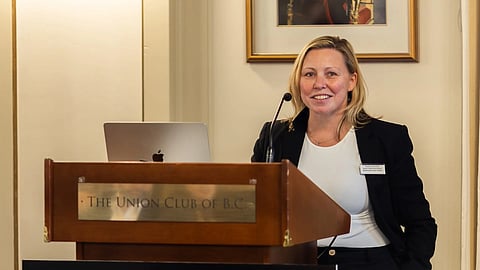
In an interview with the Western Standard, Heather Exner-Pirot, Director of Energy, Natural Resources and Environment at the Macdonald-Laurier Institute, said the public debate over the coal sector has become increasingly simplified in the wake of country singer Corb Lund’s Water Not Coal petition, with many people failing to distinguish the differences between metallurgical coal used to make steel and thermal coal burned for electricity.
"Coal has been villainized," Exner-Pirot said.
"People have a negative reaction to coal because of its contribution to greenhouse gases, but they don't have much appreciation for the nuances in how we use coal and the ways that we have to use coal."
In recent months, the Coal Association of Canada (CAC) has lobbied the federal government to designate metallurgical coal as a critical mineral, while debate over mining projects such as Northback Holdings' proposed Grassy Mountain mine in Alberta's Crowsnest Pass continues to generate debate.
In a May paper for the Macdonald-Laurier Institute, Exner-Pirot argued that metallurgical coal remains indispensable to global steelmaking and should be viewed as a strategic commodity rather than a declining resource.
She notes that while coal has become controversial in Canada, it remains the world's largest source of power generation and a critical input for steel production worldwide.
The European Union designated coking coal a critical material in 2014, with the United States also declaring metallurgical coal a critical mineral in 2025 because of its importance to steel production, transportation systems, infrastructure and defense manufacturing.
The paper goes on to state that roughly 770 kilograms of metallurgical coal are required to produce one tonne of steel and that more than 70% of global steel production still relies on blast furnaces using metallurgical coal-derived coke.
“In this geopolitical era, we are trying to expand trade alliances,” Exner-Pirot said.
“Metallurgical coal has really been a main export for Asia and is a way to absolutely contribute to doubling our US exports, so we should be leaning into that. Everything we want to build requires steel.”
While critical mineral designation is often associated with tax incentives and government support programs, Exner-Pirot said the most important benefit would be political recognition that metallurgical coal remains essential to Canada’s economy and national security.
“For me, it's the political support — for the Government of Canada to clearly say this is essential to our national security and economic resilience.”
She also argued Canada’s Asian allies — such as Japan and South Korea — rely on secure supplies of metallurgical coal to support their steel industry and manufacturing sectors.
“Maintaining reliable supply chains and industrial capacity among our allies is in Canada’s national security interest,” she said.
When asked by the Western Standard for her thoughts on country music singer Corb Lund’s anti-coal campaign, which Lund recently said had gathered the number of signatures needed to qualify for the October referendum ballot, Exner-Pirot criticized what she described as a lack of informed public discussion surrounding the campaign, arguing the issue is often presented as a simple choice between environmental protection and resource development.
“I don't think they are contributing to a smart, informed public conversation on the trade-offs that we're dealing with and the implications of development,” she said.
One of the central concerns raised by opponents of new coal mining projects has been the potential for selenium contamination in waterways.
Exner-Pirot said the issue is real but believes it is frequently portrayed without sufficient context.
She noted that selenium management challenges in BC's Elk Valley have been repeatedly studied and that governments have responded to concerns with long-term monitoring programs, water treatment requirements and environmental management plans.
“It seems to me as though the petition side is making it sound as if selenium can't be managed and that any amount of it is toxic,” she said.
“That's not the case.”
Exner-Pirot also argued public discussion often overlooks the fact that selenium is a naturally occurring element and that toxicity depends on concentration levels.
“I feel as though the selenium issue has been catastrophized or presented as a worst-case scenario without appreciating the ways that selenium can be mitigated,” she said.
Lund’s Water Not Coal campaign is expected to submit its petition signatures to Elections Alberta on Wednesday in Edmonton.
If enough valid signatures are confirmed, the petition could advance toward a province- wide referendum on whether future coal development should be prohibited in the Eastern Slopes of the Rocky Mountains on October 19.
